One Shared Space, Many Ways to Use It
A flexible shared space can host different activities without losing its purpose. Compare layouts, timings and user needs before deciding what belongs.
The common mistake in planning a public room or outdoor space is to choose its layout for the activity that is easiest to picture: rows of chairs for a meeting, tables for a class, or an open lawn for play. That choice can leave other residents without a workable place or time to use it. A fixed-purpose space serves a clear need well; a flexible shared space can serve several needs, but only if its design and daily arrangements account for the people, activities and transitions involved.
What makes a space fixed-purpose or flexible?
A fixed-purpose space is organised around one main activity. A small reading room, a sports court marked for a particular game, or a community kitchen with permanent work surfaces has features that make its intended use straightforward. Those features may also limit what else can happen there.
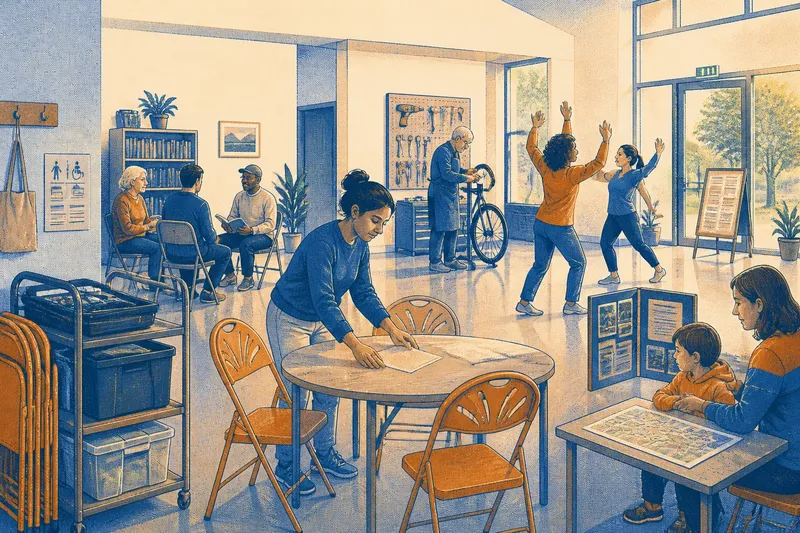
A flexible shared space supports different activities at different times, or allows parts of the space to be used in different ways at once. A neighbourhood hall might host a children’s session in the morning, a residents’ meeting in the evening and a repair café at the weekend. Flexibility does not mean that every activity fits. It means that a place can accommodate a considered range of uses without extensive rebuilding or constant conflict.
Think of the difference between a fitted cupboard and a clear shelf. The cupboard makes one arrangement easy; the shelf can hold different things, but someone still has to decide what belongs there and keep it usable.
Which activities need to share the space?
Begin with actual activities, not a general wish for a place to be “for everyone”. That phrase can obscure practical differences. A quiet advice session needs a different sound environment from a dance class. A food stall needs access for deliveries and waste collection. A children’s play session may need a clear view from the room entrance, while a group discussion needs seats arranged so people can see and hear one another.
For each proposed use, ask what it requires and what it may prevent. Consider:
- Whether the activity needs fixed equipment, such as a sink, a court marking or a projector.
- How much floor area it uses and whether people need room to move around it.
- Whether it creates noise, food waste, deliveries or a need for privacy.
- Whether participants arrive together, come and go, or need a place to wait.
- What must be cleared, cleaned or stored before another activity can begin.
This list helps distinguish uses that can alternate from uses that can happen side by side. A local history display and a quiet reading group may coexist if there is space to separate them. A loud rehearsal and a confidential support conversation may require different rooms or different time slots. A flexible plan should make those limits visible rather than promising that every activity can happen everywhere.
Who can use it, and what might keep them out?
“Open to the public” describes a general intention, not everyone’s experience of a place. A space may be difficult to use for someone who cannot manage steps, needs an accessible toilet, relies on a support person, or is uncomfortable entering an unfamiliar room alone. The entrance, route through the building, seating, signs and booking rules all shape who can participate.
Ask potential users about practical details while options are still being considered. Can a wheelchair user reach the activity area without moving furniture? Is there a quiet corner for someone who needs a break? Can a pram be parked without blocking an exit? Is there a clear sign explaining whether people may drop in or must register? These are questions for the people who will use the place, not assumptions to settle on their behalf.
Also look at who is likely to feel that a space already belongs to somebody else. Regular clubs can create a welcoming routine for their members while making newcomers hesitant to enter. A noticeboard, a named contact and a clear explanation of how to request a session can make access less dependent on knowing an organiser personally. Shared use is a matter of permissions and social cues as well as furniture.
When do different users need the space?
Availability on paper can differ from availability in daily life. A room may be unbooked in the early afternoon, for example, but that time may not work for people at school or at work. An outdoor area may be free after dusk yet difficult to use if lighting, transport or opening hours are limited. Ask which times are practical for each group, rather than treating empty slots as automatically useful.
Build transitions into the timetable. A community meal, a language class and an evening meeting may all fit in one day only if there is time to set up, clear away and clean between them. If the timetable is too tight, the next users may inherit clutter or begin late. A little overlap can allow people to ask questions, return equipment or leave without rushing.
Consider seasonal and recurring patterns too. Outdoor activities may need an indoor alternative during poor weather, while a hall used by a weekly group may be needed for a one-off local event. A useful schedule says which uses take priority, how cancellations are handled and who can make a change. The details should be easy to find before someone plans an activity around the space.
How can a layout support change without confusion?
Flexible layouts work best when people can understand them quickly. Stackable chairs, folding tables, lockable storage and clearly marked zones can help, but each choice has a trade-off. Heavy furniture may be difficult to move. Portable equipment can disappear or be left in the way. Storage placed far from the activity area can make a simple room change burdensome.
Plan the route from storage to setup and back again. Decide who is responsible for moving furniture and where items go when they are not in use. Marking a storage area with simple labels can prevent shared equipment from being scattered among different groups. Where an activity needs a permanent feature, such as a sink or accessible workstation, retaining that feature may matter more than keeping the whole room open.
Layout changes must not compromise safe access. Keep escape routes clear, avoid placing furniture where it blocks doors, and do not ask untrained users to alter building systems. For any proposed use, follow the venue’s instructions and applicable local requirements; seek qualified advice where the question involves building safety or accessibility compliance.
Say a neighbourhood hall has a weekly craft group and residents want to add a monthly advice session. Imagine the organisers first check whether both groups need the same tables, privacy and arrival time. They could schedule the advice session in a quieter period, store the craft materials in labelled cupboards and provide a screen for private conversations. The observable result to look for is whether the room can be reset on time and whether visitors can speak without being overheard; if not, the schedule or room arrangement needs revisiting.
What questions help compare the options?
Is a fixed-purpose space ever the better choice?
Yes. A specialised room can provide equipment, privacy or consistent conditions that would be difficult to recreate for each session. If one activity is essential and frequent, designing around it may serve local users better than adding flexibility that no one can manage.
Can two activities use the same space at once?
Sometimes, if they do not compete for sound, privacy, access or movement. A quiet display and a drop-in information desk may coexist, while a performance and a private appointment are unlikely to work well in the same open room.
How should a group decide who gets a popular time slot?
Publish a clear allocation method, such as rotating access or giving priority to uses that cannot happen elsewhere. Explain how requests are considered and how people can raise a concern, so decisions do not rely only on informal connections.
What should be reviewed after a new use begins?
Ask users and nearby groups whether the timing, access, noise, storage and room reset are working as intended. Record specific problems and adjust one arrangement at a time, so it is possible to see which change made the space easier to share.
How can a place keep its shared purpose clear?
Put the practical rules where users can find them: who may book, how to request a time, what equipment is available, what must be returned, and whom to contact if plans change. Keep the rules short enough to use, but specific enough to prevent one group from assuming it has exclusive control. If a space is managed by a council, charity or local association, identify which body handles bookings and which handles maintenance.
Review the arrangement with a range of users after it has been in use. A meeting with only regular organisers may miss barriers faced by people who tried once and did not return. Invite comments through more than one route, such as a short paper form at the venue and a contact address for people who cannot attend a discussion. Look for repeated practical issues rather than treating every preference as a demand for a redesign.
The best choice between a fixed-purpose room and a flexible shared space depends on what local people need, when they can use it and what the venue can support. A good plan names the uses it welcomes, the limits it has, and the arrangements that let different groups take their turn. For anyone searching for a shared space, those details are more useful than a broad promise that a place is open to all.